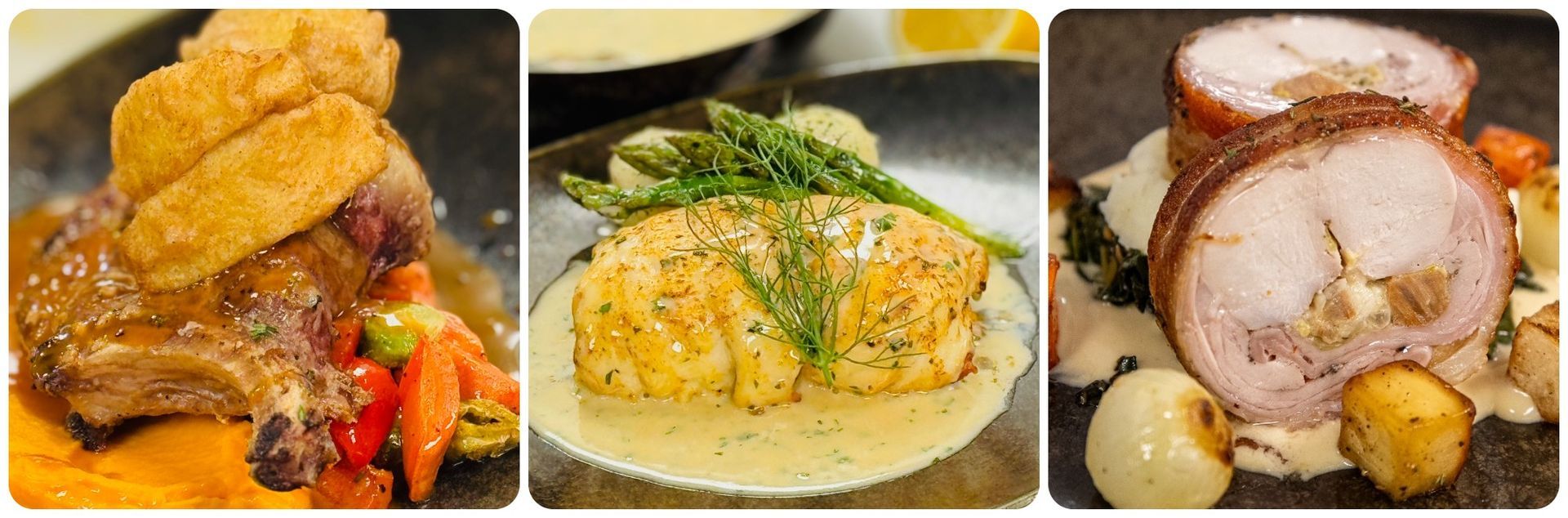
All Hail Asparagus the King of Springtime Vegetables
Farrow Island Salmon with Home Grown Asparagus
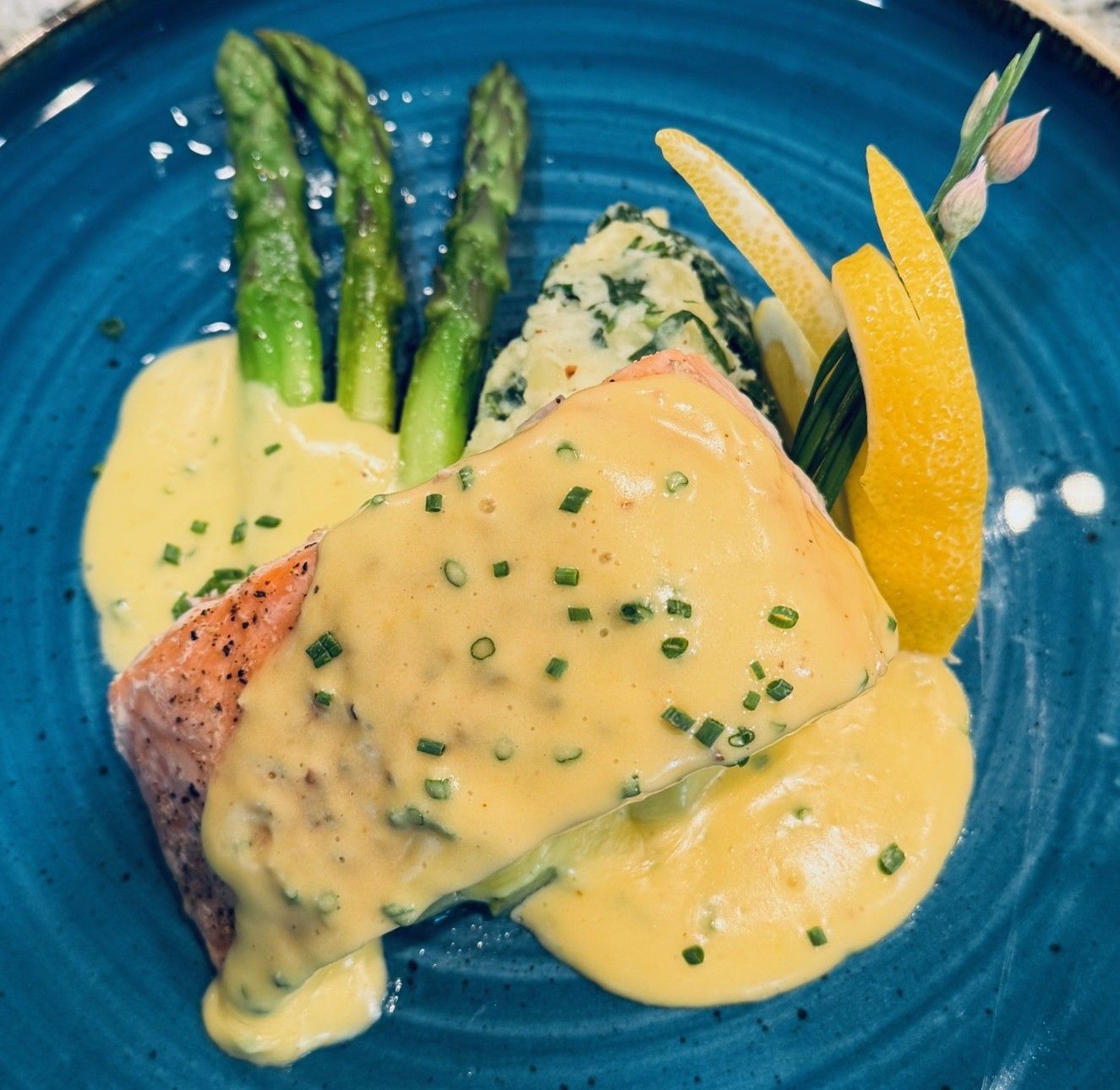
Spring brings the arrival of our asparagus in its third year since we planted it. In this post I will share three dishes that I have prepared with Asparagus two of which use our garden grown asparagus and the last one is my chilled asparagus soup that I teach my students how to prepare in my Soup and Sauce class at Ozarks Tech.
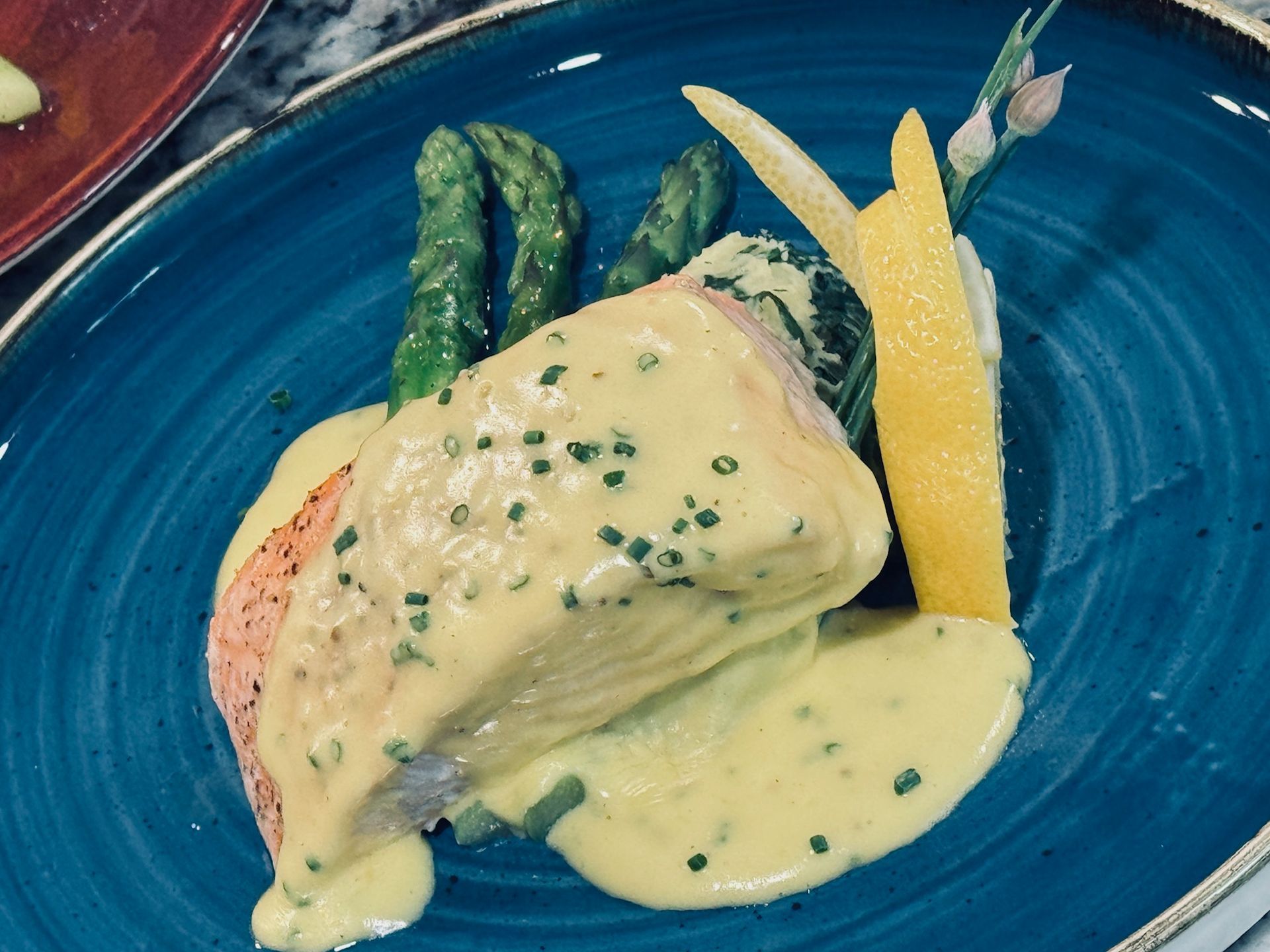
Asparagus and Salmon are a classic combination and both go well with a buttery lemon Hollandaise sauce. Mashed potatoes mixed with Kale is a variation of the Irish classic potato dish known as Colcannon potatoes and rounded out the plate. In this post I will describe how I cooked it with some tips on the process of growing Asparagus and how to cook the stems properly. When preparing this dish seek out the freshest salmon you can find. Here I used Farrow Island Norwegian salmon that I purchased from our best local fish monger at Seafood Express in Springfield - Express Foods | Fresh Seafood & Meat Market
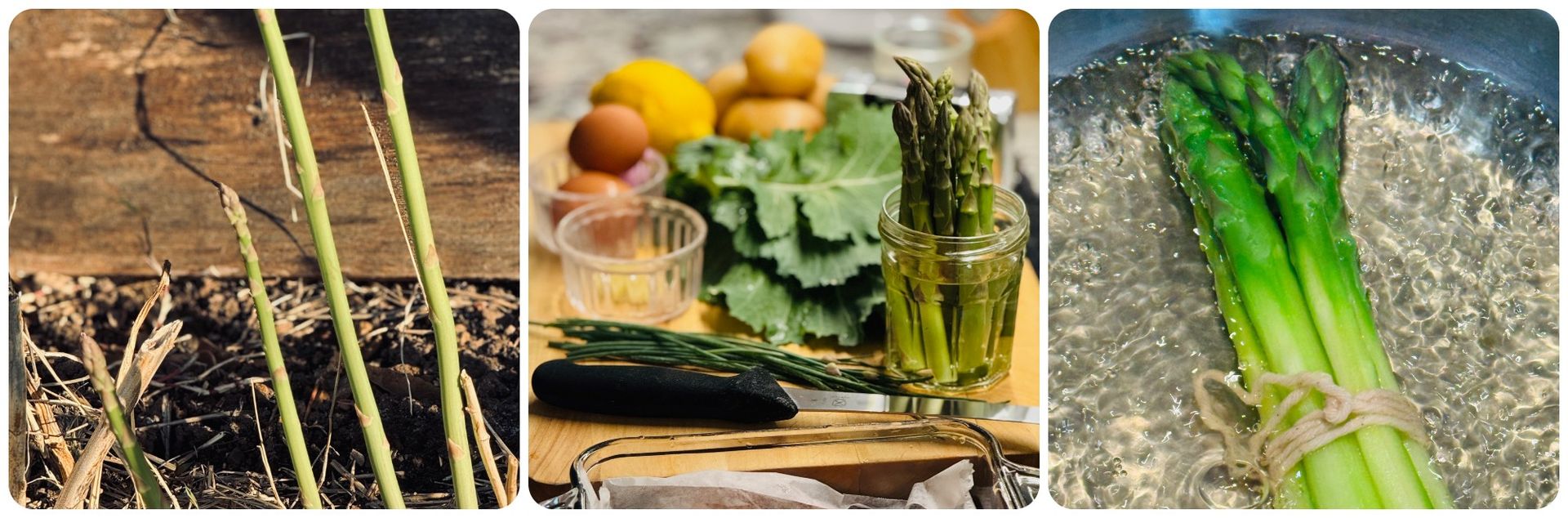
Asparagus is a perineal plant which I have heard can grow for more than 20 years returning every year in the spring when properly cared for. It takes some patience to grow it due to the fact that it should grow for at least three seasons before it can be harvested and that is if you grow from root stocks, not seeds. The root stocks which can be purchased from good garden stores or online should be planted in a deep trench and then mulched while they grow. The stocks that sprout up will turn to lovely frilly ferns that absorb energy from the sunlight to establish the root system. By resisting the temptation to pick them and eat them in the first two years the roots can grow and spread. On the third year they can be harvested in the spring for about 4 weeks from when they first emerge in the early spring.
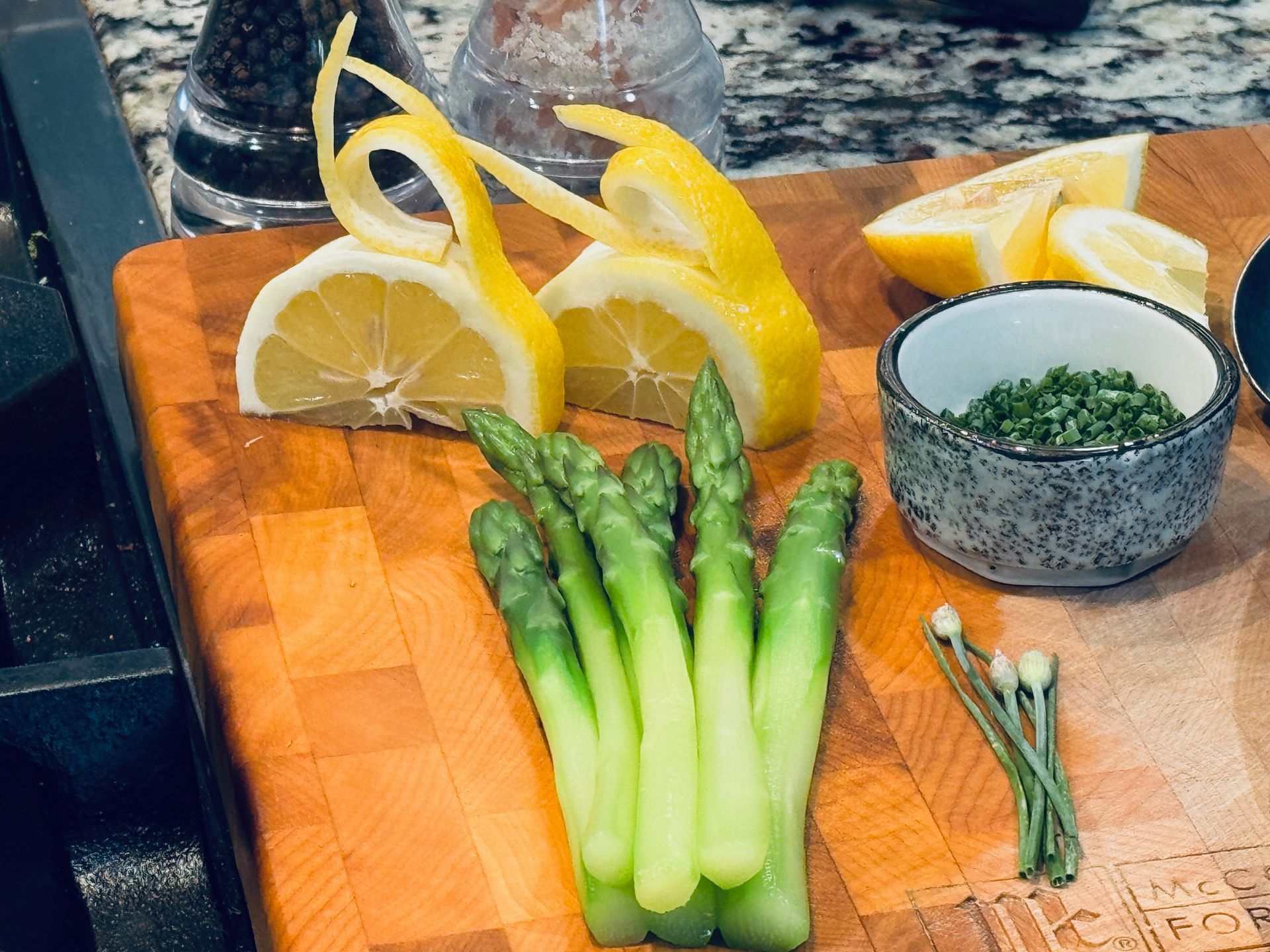
Thick stocks are best peeled at the base since they can be fibrous. Asparagus can be grilled, roasted, deep fried in batter and steamed or boiled in salted water. The classic way to boil them is to tie them together with twine so that they stay together and the tips do not become damaged when cooking. I still remember when I was a sous chef at the Renaissance hotel in Washington DC when the French executive chef had me peel, tie and cook eight cases of thick asparagus- needless to say that took awhile.
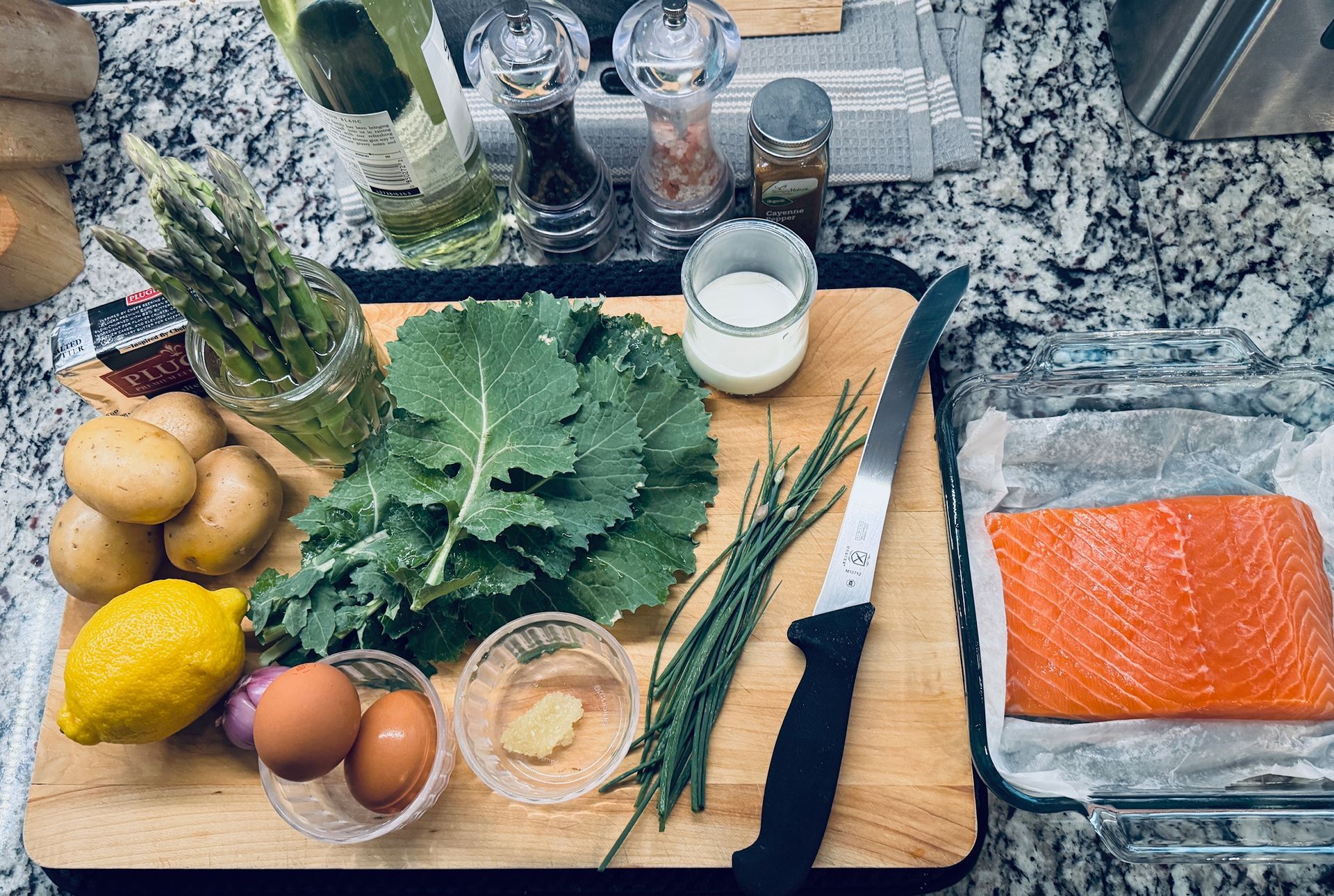
Over this past winter in our unheated greenhouse, we were able to grow a winter variety of blue Russian kale. For this dish I used the Kale mixed with mashed potatoes for my version of the classic Irish "Colcannon Potatoes".
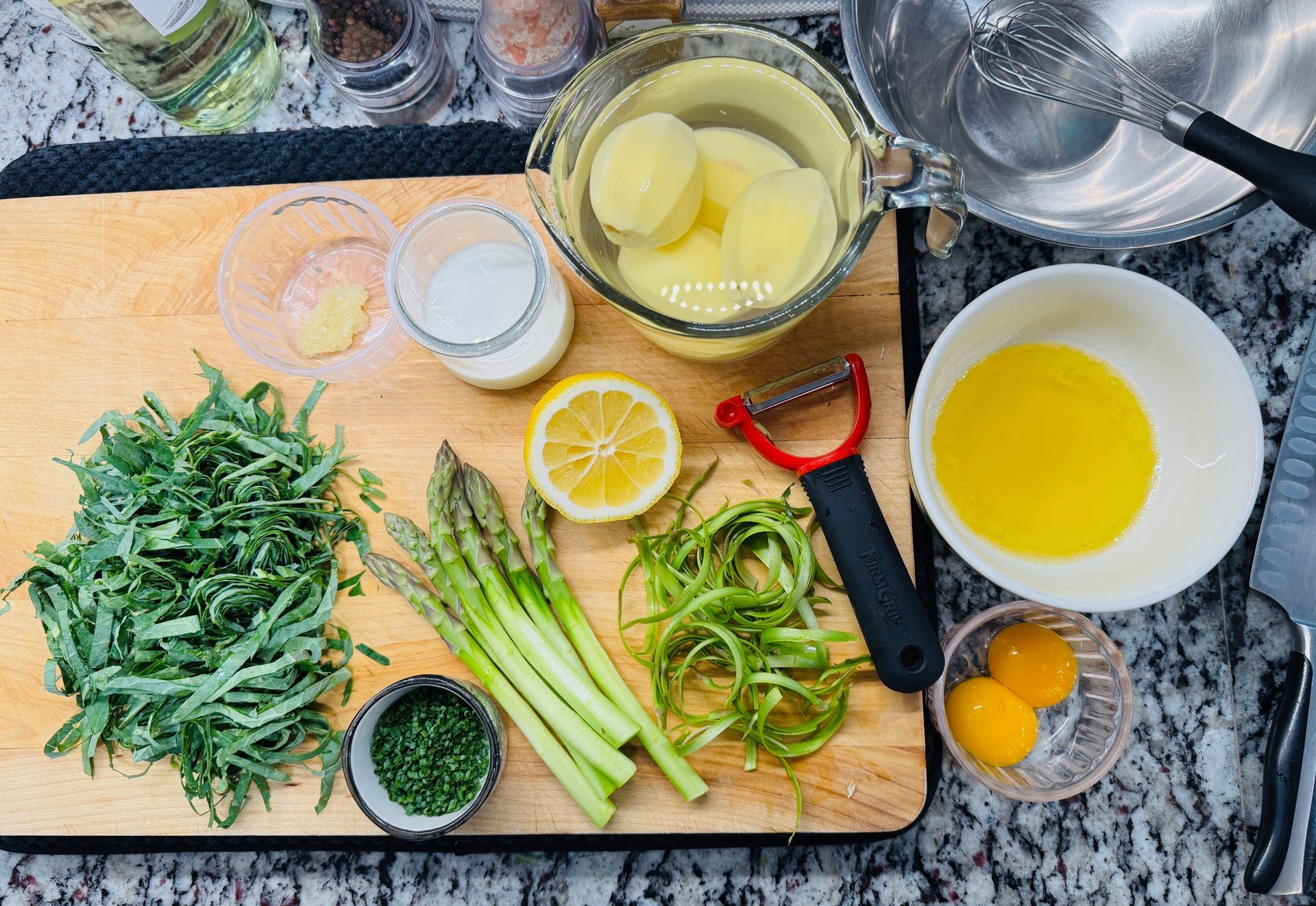
Here is a photo of all the mise en place for the complete salmon dish. I used a very flexible Mercer knife to skin the Farrow Island Norwegian Salmon that I purchased from my favorite local fish monger Seafood Express. See my recommendation page for more on both of these companies.
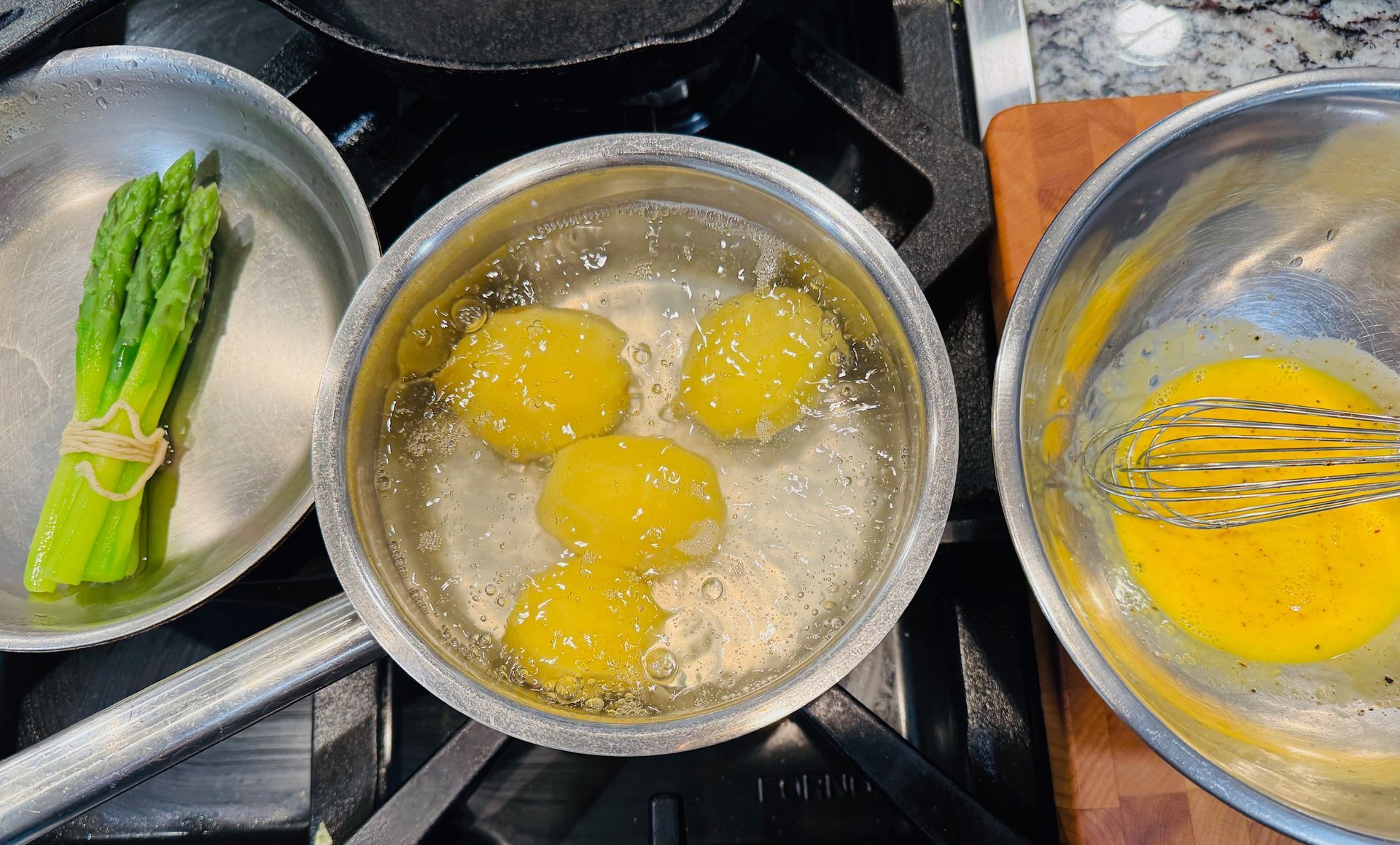
Hollandaise sauce is one of the five mother sauces in classic French cooking and is the base for many variations of sauces also called small sauces. It is basically an emulsified sauce of egg yolks, lemon juice and clarified butter with some spices. Here is my small home style version of this classic sauce.
Hollandaise Sauce
Yield: 2 portions
Ingredients:
2 each Egg yolks
½ Lemon Juiced (about 1 1/2 teaspoons juice)
1 ½ TBL Water
¼ lb. Plugra Butter (unsalted), clarified but not too hot
Salt, White Pepper, and Cayenne Pepper or Tabasco to taste
Method:
1. Whisk egg yolks, lemon juice, and water in a large, stainless-steel bowl
2. Whip and cook over lightly boiling water until light and fluffy. Cook the egg yolks to least 160˚F
3. Whip in the clarified butter in a slow stream (see Method for clarified butter below) add more water if the sauce becomes to thick
4. Season with salt, white pepper and cayenne pepper or Tabasco sauce
5. Keep the sauce warm.
Method for clarified butter:
1. Melt the unsalted Plugra or European style butter in a small heavy bottom sauce pot
2. Bring to a light boil; and cook until all of the liquids evaporate, stirring occasionally
3. The butter is clarified when it stops boiling and is clear
4. Immediately strain into a metal bowl and reserve until needed.
Caution! Once the butter stops to boil and is clear, you will have only a few seconds before the butter starts to brown and then becomes burned.
Pepper Pan Seared Ribeye with Asparagus and King Oyster Mushrooms
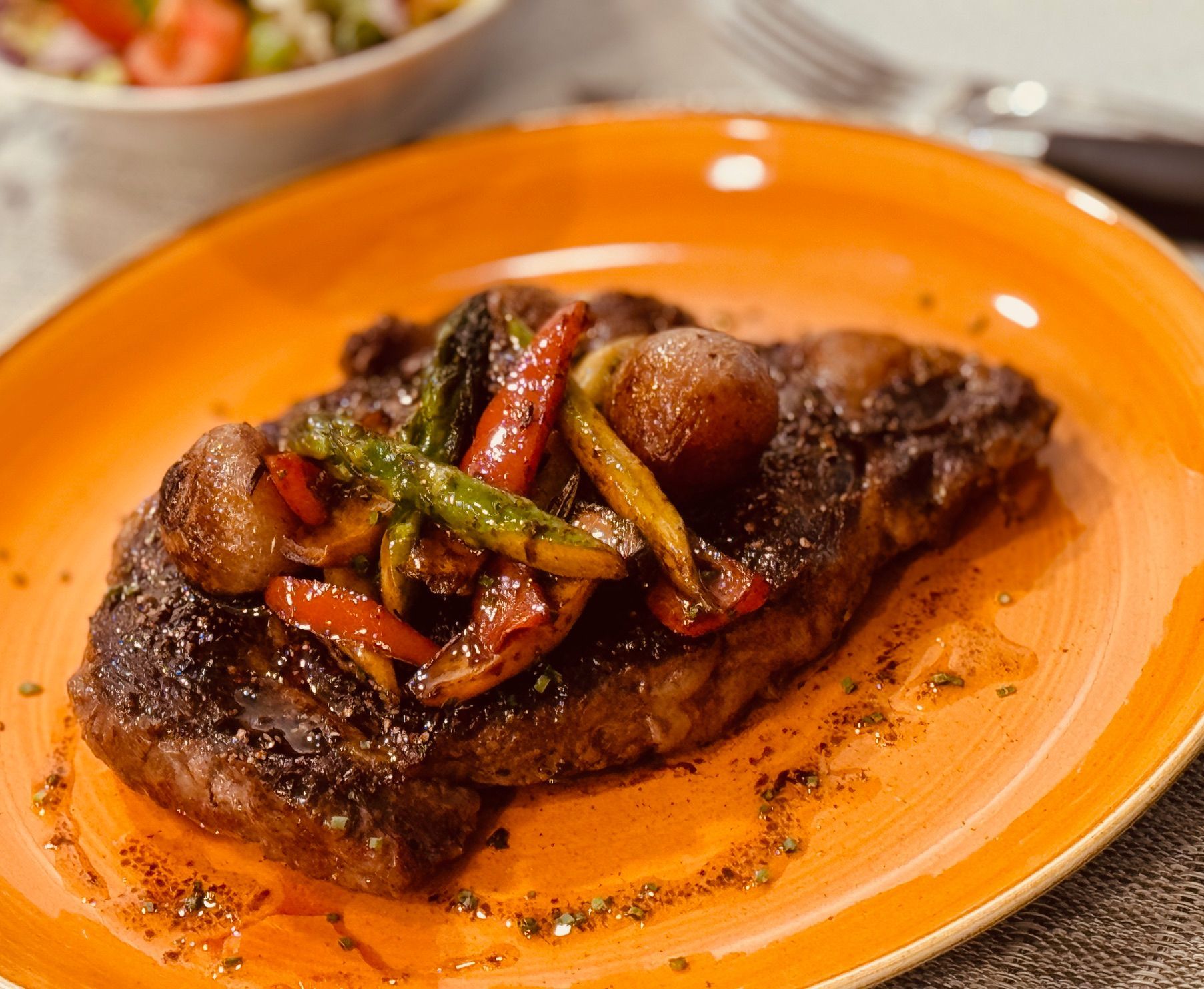
Hertzog's cast iron seared black pepper crusted rib eye topped with our home-grown asparagus, king oyster mushrooms, red peppers and roasted shallots drizzled with Worcestershire butter made for a delicious meal. Another great way to serve asparagus. I picked up this Missouri raised prime ribeye steak at Restaurant Market Place here in Springfield check out their store at the link- Home
Chilled Asparagus soup with Goat Cheese Mousse
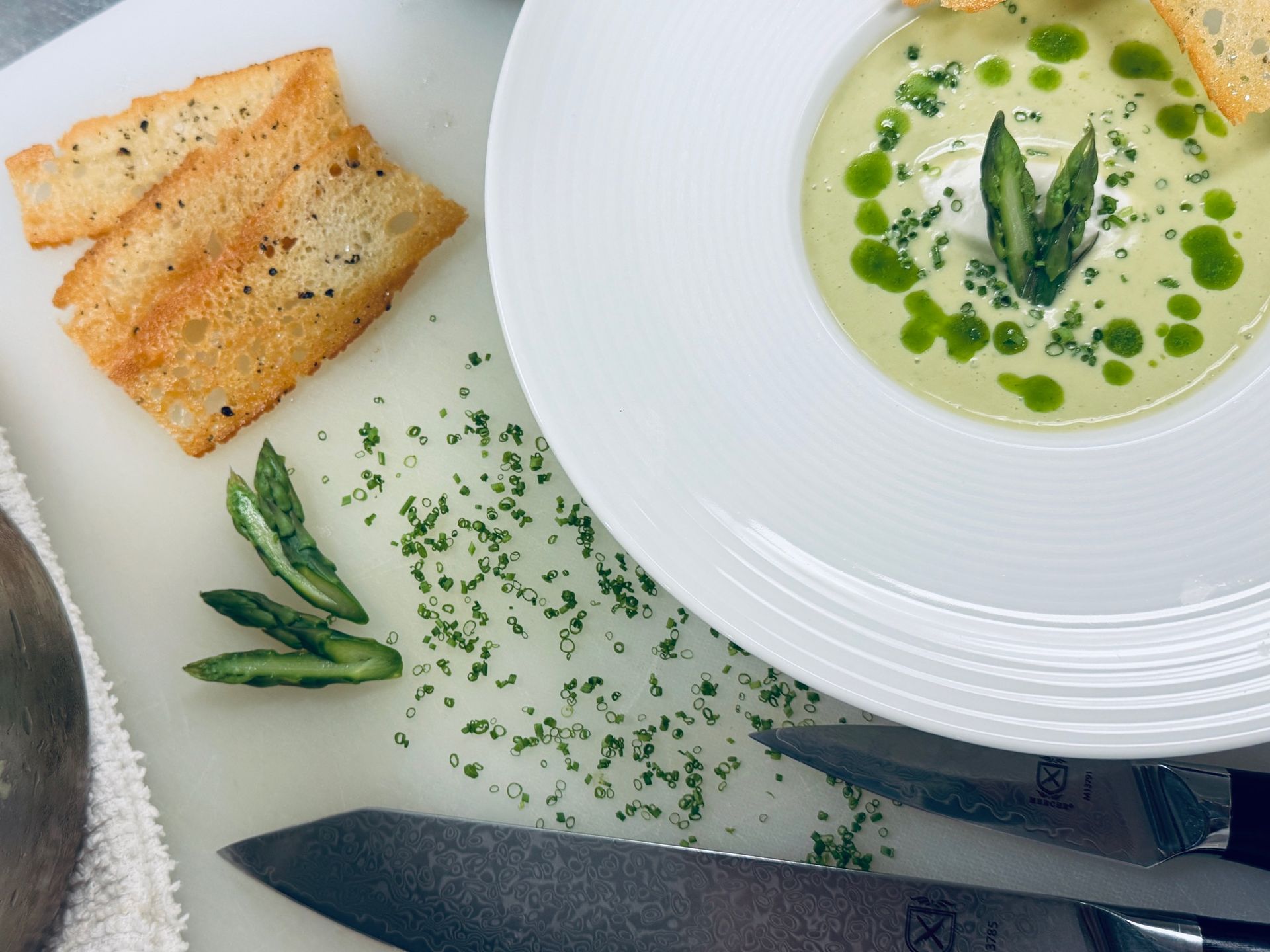
Chilled asparagus and leek soup topped with goat cheese mousse is a soup that I often served at the University Club of MU. This image comes from my Soup and Sauce class at Ozarks Tech. I originally developed this recipe to use up all of the left-over asparagus ends that we often had in abundance from large banquets. In class I evaluate my students on the flavor, viscosity, shape of the goat cheese quenelle, the size of the paper-thin baguette croustade and the thinness of the chives. The chives of this thickness can only be cut with a razor-sharp knife. Here I used my Damascus steel Mercer French Knife.
Asparagus, Leek, and Potato Soup
Yield 3 1/2 quarts
Note can be served hot or cold
Ingredients:
1 quart Asparagus stems, chopped fine
1 cup Leek with light green stalk only, chopped
½ cup Celery, chopped
½ cup Onions, chopped
4 oz Butter
½ cup Flour
1 ½ tsp Tarragon, chopped
1 TBL Basil, chopped
1 TBL Chives, chopped
1 cup White potatoes (Yukon Gold or Idaho), peeled and diced
5 cups Vegetable or chicken stock (hot)
1 quart ½ and ½
Ingredients: Garnish
Asparagus, chives, diced potatoes
For Cold Soup omit the diced potatoes and top with Goat cheese mousse, Blanched Asparagus and Chives
1. Melt the butter in a heavy sauce pot
2. Add the onions, celery, leeks and asparagus and sauté until translucent and tender over medium heat
3. Add the flour and make a roux
4. Add the ½ and ½ and cook to make a bechamel
5. Add the hot stock
6. Add the herbs, and potatoes and cook until the potatoes are tender
7. Blend until smooth (if too thin return to the stove and thicken with a cornstarch slurry)
8. Strain and season with salt and white pepper if needed
9. Garnish and serve or chill, garnish and serve.