Seacuterie
Seacuterie, the art of cold seafood preservation and presentation
Seacuterie is a relatively new term for the ancient way of preserving seafood for later use. Extravagant displays can be achieved when the seafood is presented and served in an artistic fashion. Seacuterie encompasses the techniques of curing, smoking and cooking seafood which are techniques used in Garde Manger the subcategory of culinary arts which means the art of cold food preparation and presentation. Garde Manger is a subject that contains a huge number of techniques, recipes and methods, one of which is Charcuterie which traditionally focuses on cold food prepared from pork like ham, salamis, pates, etc.
In seacuterie the current trend is to present chilled sea food on seacuterie boards. This type of offering is an evolution from the French classic L'Assiette Fruits de Mer (cold seafood platter) or the Grand Plateau Fruits de Mer (seafood tower) both of which are still served today in extravagant seafood restaurants.
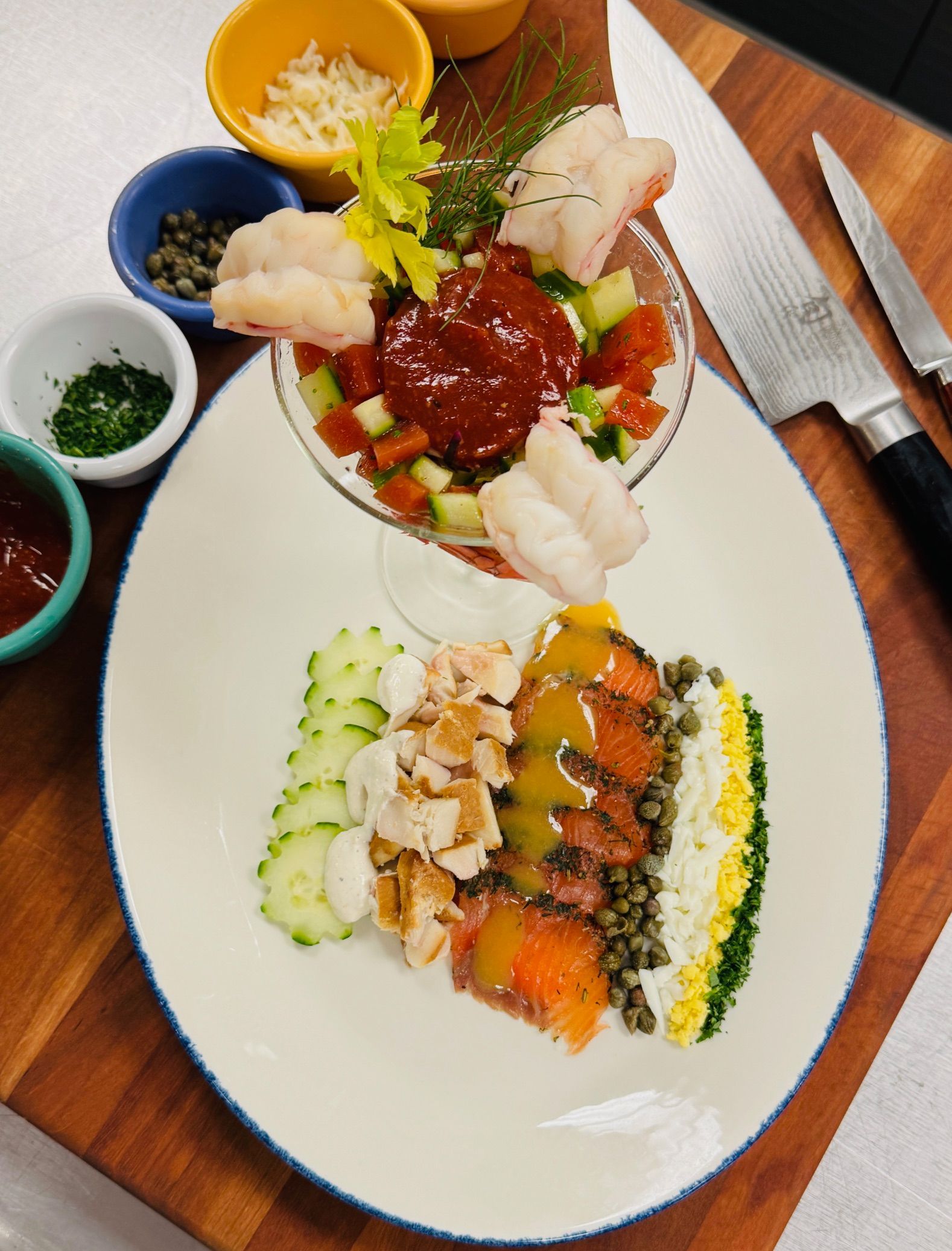
At Ozarks Tech I discuss cold seafood presentation and techniques and teach my students how to prepare a trio of cold seafood with chilled shrimp, trout and salmon in a lesson from my Garde Manger class. That is where the image of the trio of seafood came from in the first image of this post.
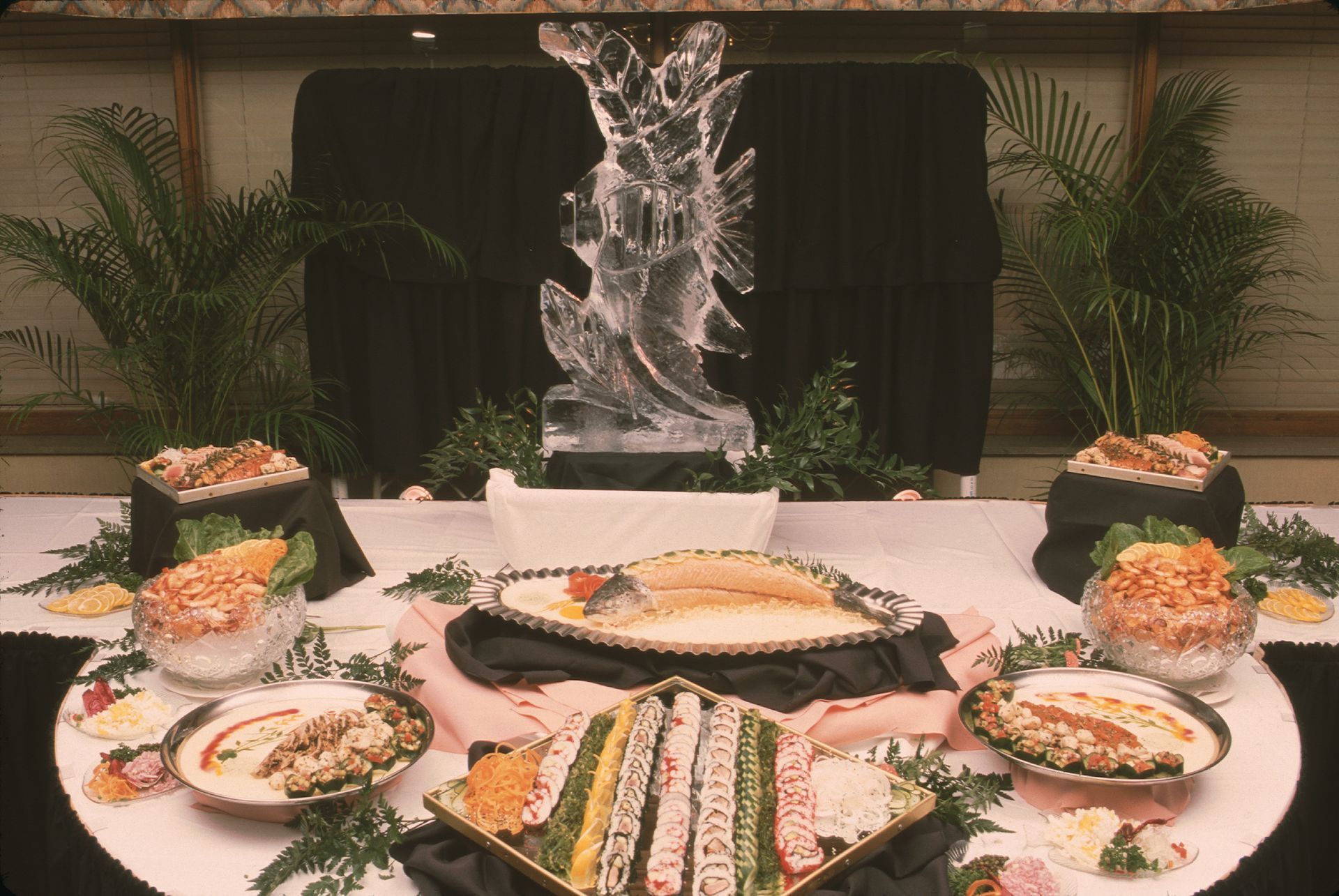
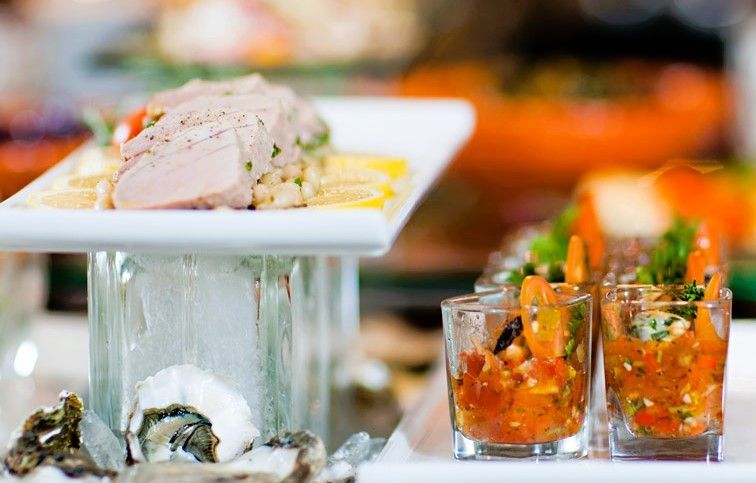
When I was a working executive chef, I was very successful in creating very popular chilled sea food displays for brunch buffets and also in multicourse meals. Below are two images from some of my past buffets at the University Club of MU on the campus of the University of Missouri also known as Mizzou. Along with a photo of an elaborate seafood buffet with an angle fish ice carving from when I was the executive chef of the Topeka Country Club, this image was featured in Club Management magazine.
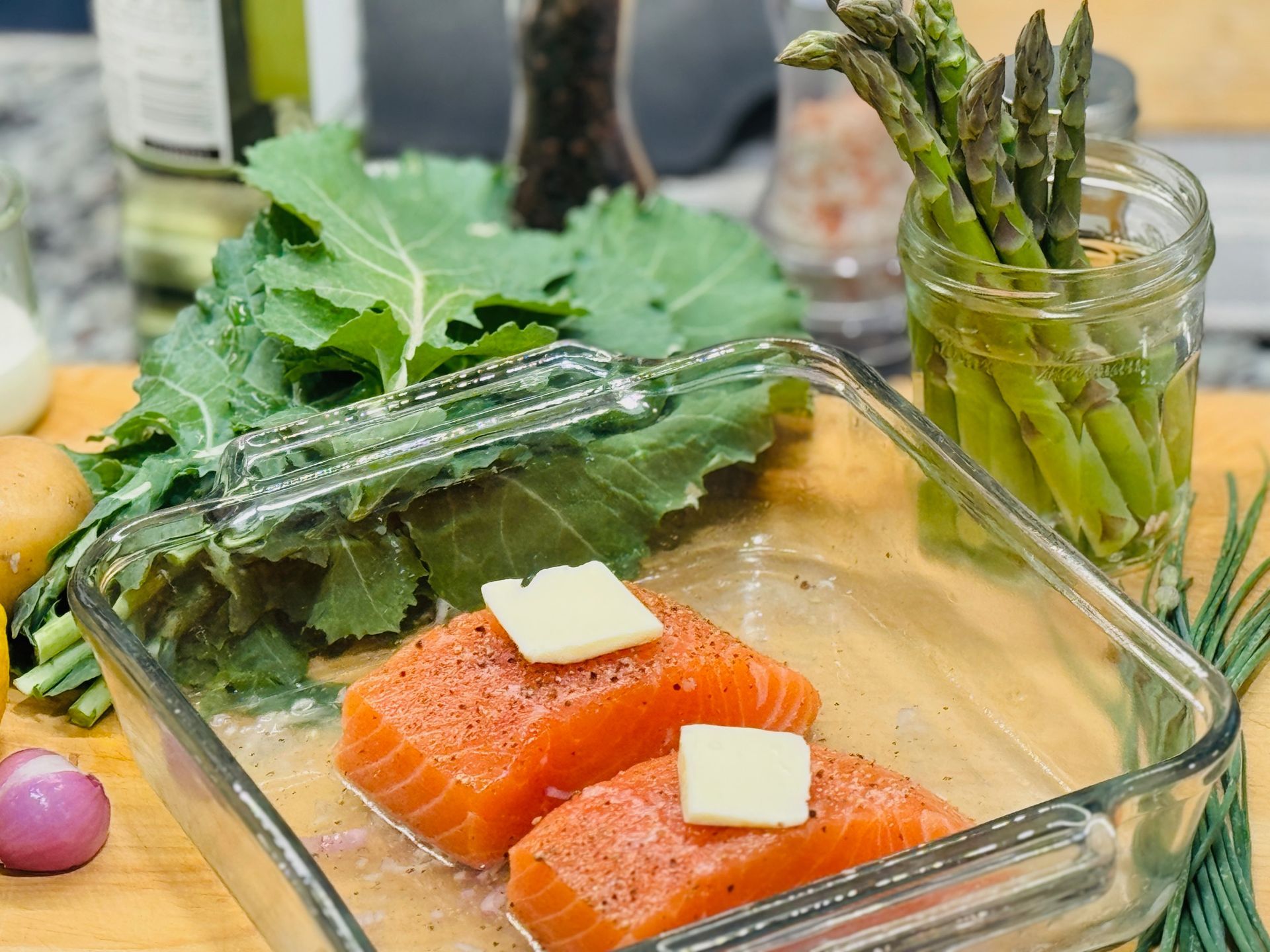
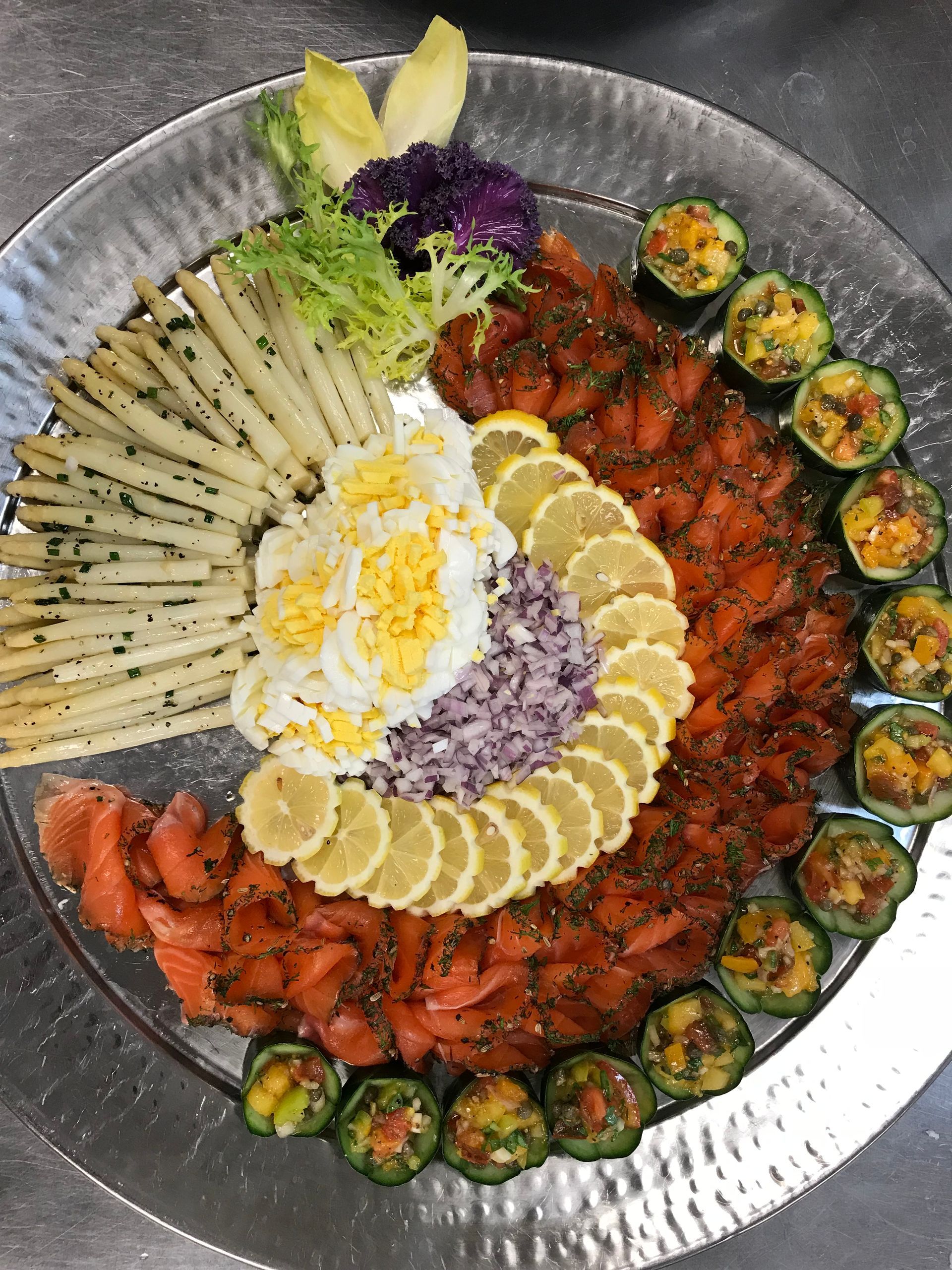
Grava lox is one of the recipes that I learned many years ago it is an ancient preservation technique that is a specialty from the Scandinavian countries. It is considered to be a national dish from that area of the North Atlantic. It is done with a dry curing technique using 50/50 salt and sugar along with spices. Here is my recipe that I learned from one of my former French Chefs who was from Britanny, when I was the sous chef of the Ramada Renaissance hotel in Washington, DC. It should be made with the freshest salmon available and can be used in variety of ways.
Grava Lox of Salmon
Yield ½ lb or 2 servings
1 each 8oz center cut piece of salmon filet, skin on (should be very fresh and high quality)
½ cup Kosher Salt
½ cup Granulated Sugar
2 teaspoons Fresh Dill, Chopped
½ teaspoon Fennel Seed
¼ teaspoon Cracked Black Pepper
Garnish-
2 Tablespoons Fresh Dill, Chopped
½ teaspoon Fennel Seed
½ teaspoon Cracked Black Pepper
1. Trim off the belly and remove any pin bones from the salmon filet
2. Dry with a paper towel
3. Place in a small dish or pan skin side down
4. Mix the curing salt, sugar, dill, fennel seed and black pepper together and cover the salmon filet
5. Refrigerate for 48 hours
7. Remove from the salmon and wash off the curing mix
8. Dry with a paper towel
9. Prepare the garnish with the fresh dill, fennel and cracked black pepper and cover the salmon filet
10. Wrap with plastic and press into the filet, the entire surface of the cured salmon should be covered (Grava lox will last 7 to 10 days)
11. Slice thin and serve or refrigerate until needed
Serve with Honey mustard, Chopped Hard Boiled Eggs, Chopped Red Onions, Capers, Lemon and Croustades
For Hot Smoked Salmon cure the salmon for 24 hours, rinse and dry. Coat with brandy and top with cracked pepper if desired. Hot smoke and brush with Olive Oil when the salmon is removed from the smoker while still hot. Chill and serve.
For more information on seafood charcuterie and what trends are being used in some top restaurants check out this article from Food and Wine - Fish Charcuterie Is Putting Seafood Boards on the Menu
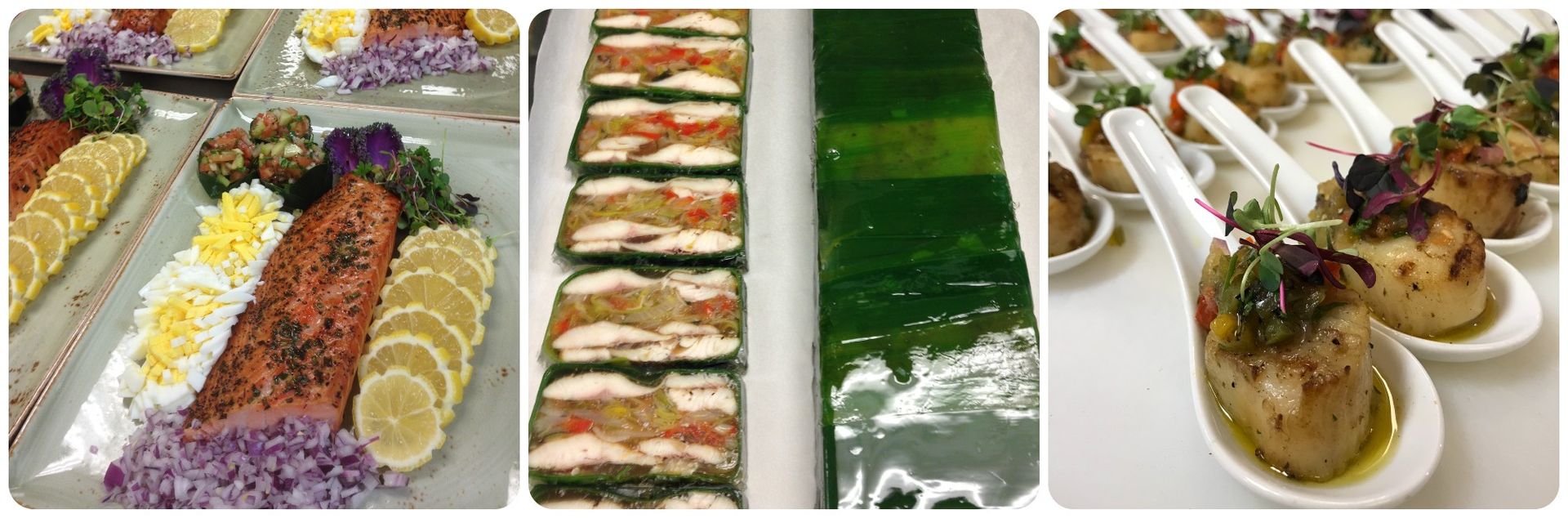
I have created many beautiful displays and buffets using chilled seafood. Perhaps one day I will write another book on the subject of this very popular and high-end art of serving delicious seafood and fish specialties found throughout the world.