Get Inspired by Some of my Best Desserts for the Holidays!
Some of my Best Desserts from "Pastry & Dessert Techniques"
According to the story October was designated to be national dessert month by President Ronald Regan in 1984 to celebrate the heritage and variety of desserts in America. Now that the Holiday season is fast approaching here are some of my past desserts to get you inspired for baking and dessert preparation beyond the traditional desserts. These recipes are all about flavors, textures, and unique ways to present classic European desserts in upscale ways that I offered as a working chef.
The base recipes and techniques are all outlined with recipes and techniques in my book- "Pastry & Dessert Techniques". Below each image is short description of the dessert with a brief story about each dessert.
This season I am working on scaled down versions for home baking with recipes from my book.
Plum Hazel Nut Tart
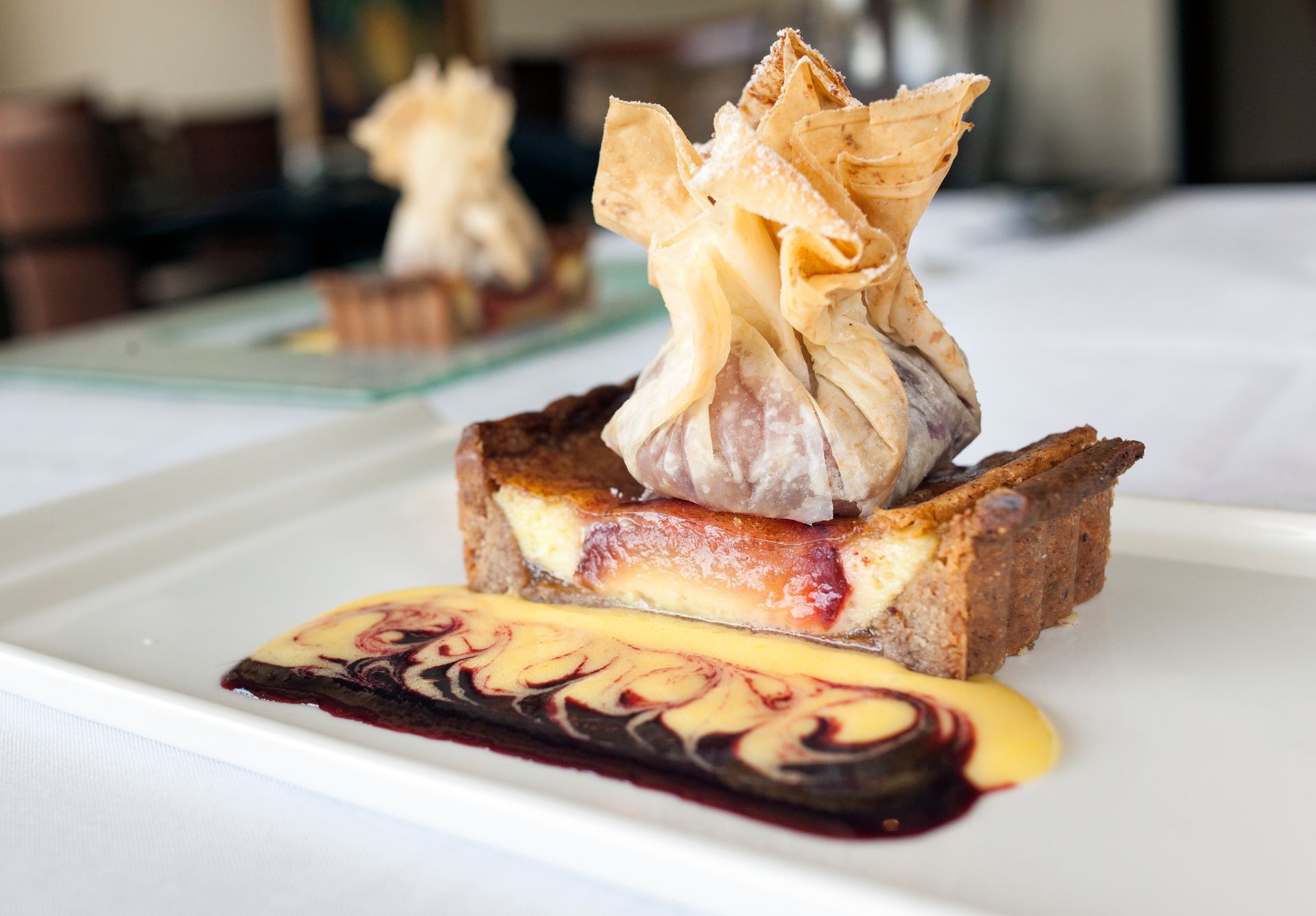
The opening image of this post features one of my award-winning desserts that I served many times. It is made with a classic Linzer dough which I first learned how to prepare when I worked in New Orleans at the Switzerland Bakery. I layered the tart with sliced plums on a thin base of raspberry jam and then filled with a simple egg, sugar and butter custard prior to baking. The finished plate is presented with a lemon champagne sabayon sauce and merlot black fig vinegar gastrique sauce. The tart is topped with a baked phyllo purse filled with black berries and raspberries. I presented the technique for making this dessert at the American Culinary Federation national conference in Kansas City.
Chocolate Truffle Tort
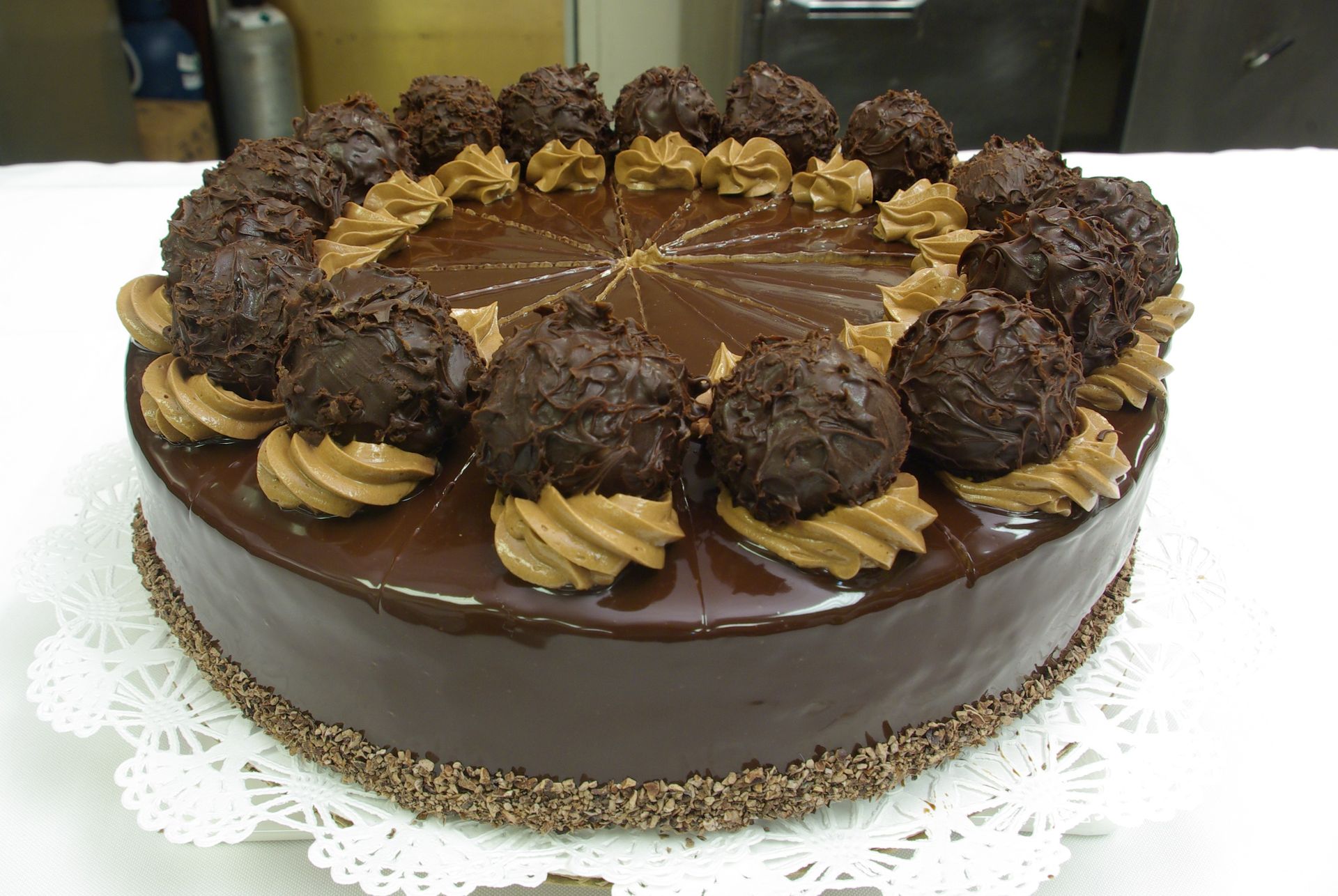
Three layers of chocolate genoise, chocolate ganache butter cream and dark chocolate truffles. The technique for making genoise takes some skill to create a light tender sponge, once mastered it is base for many classic desserts. The truffles are double dipped and rolled on a roasting rack to create the spikes that are not often seen in many truffles these days. I learned this technique many years ago and the procedure for preparing them was the subject of my first article that I wrote which was published in the National Culinary Review. The finished torte is enrobed with a liquid ganache and crumbed on the bottom with a ring of Cocco nibs for a nice crunch and additional deep chocolate flavor enhancement.
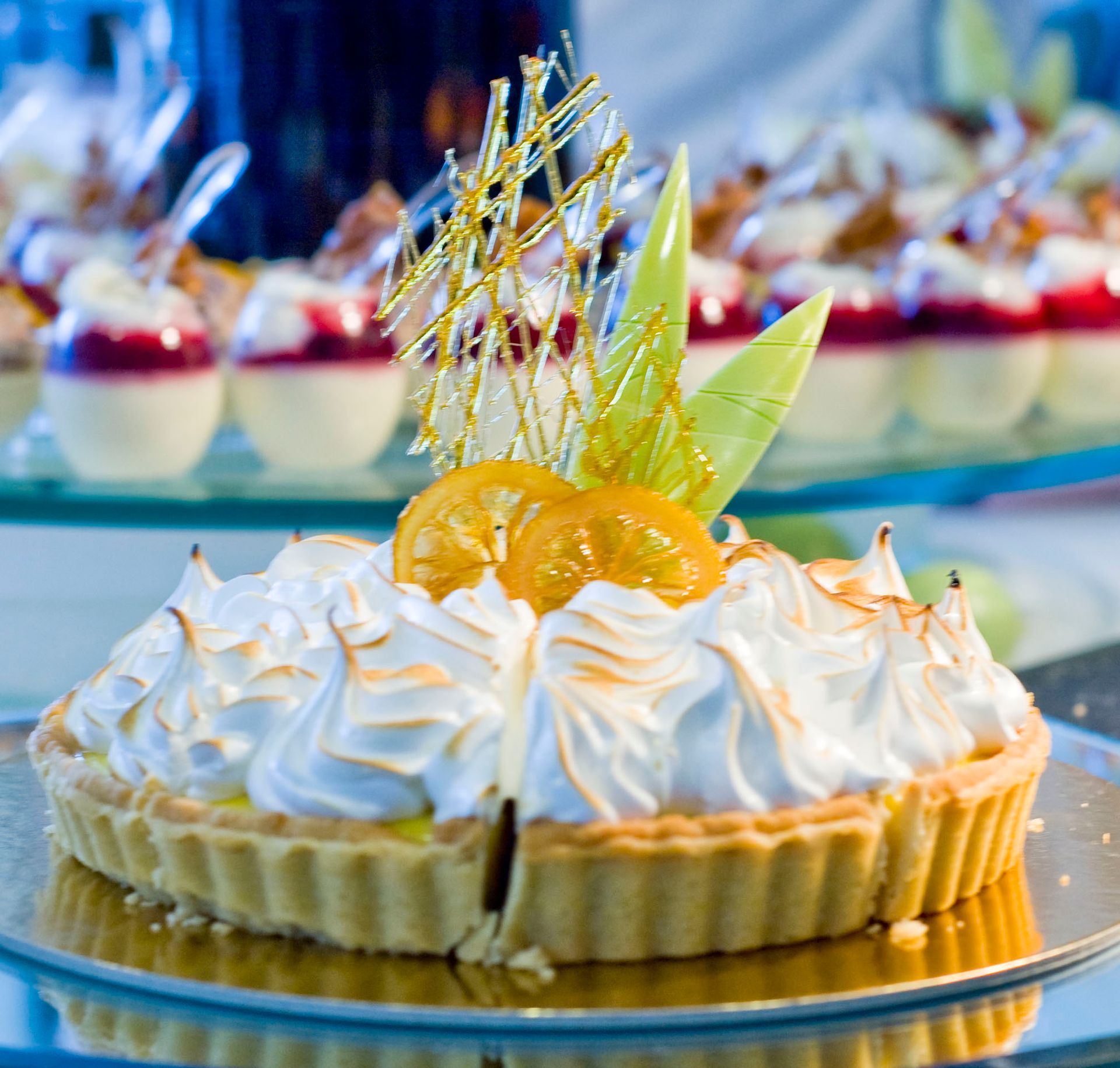
Lemon Merengue Tart
This tart is a classic simple dessert made in many ways. Filled with a lemon cream based on lighted curd made with lemon juice, egg yolks and sugar then enriched with butter and bound with gelatine. This image was taken from one of my dessert buffets from the University Club of MU. The garnish is made with caramel, candied lemon slices and white chocolate leaves that were made with embossed transfer sheets used in many hi-end pastry shops.
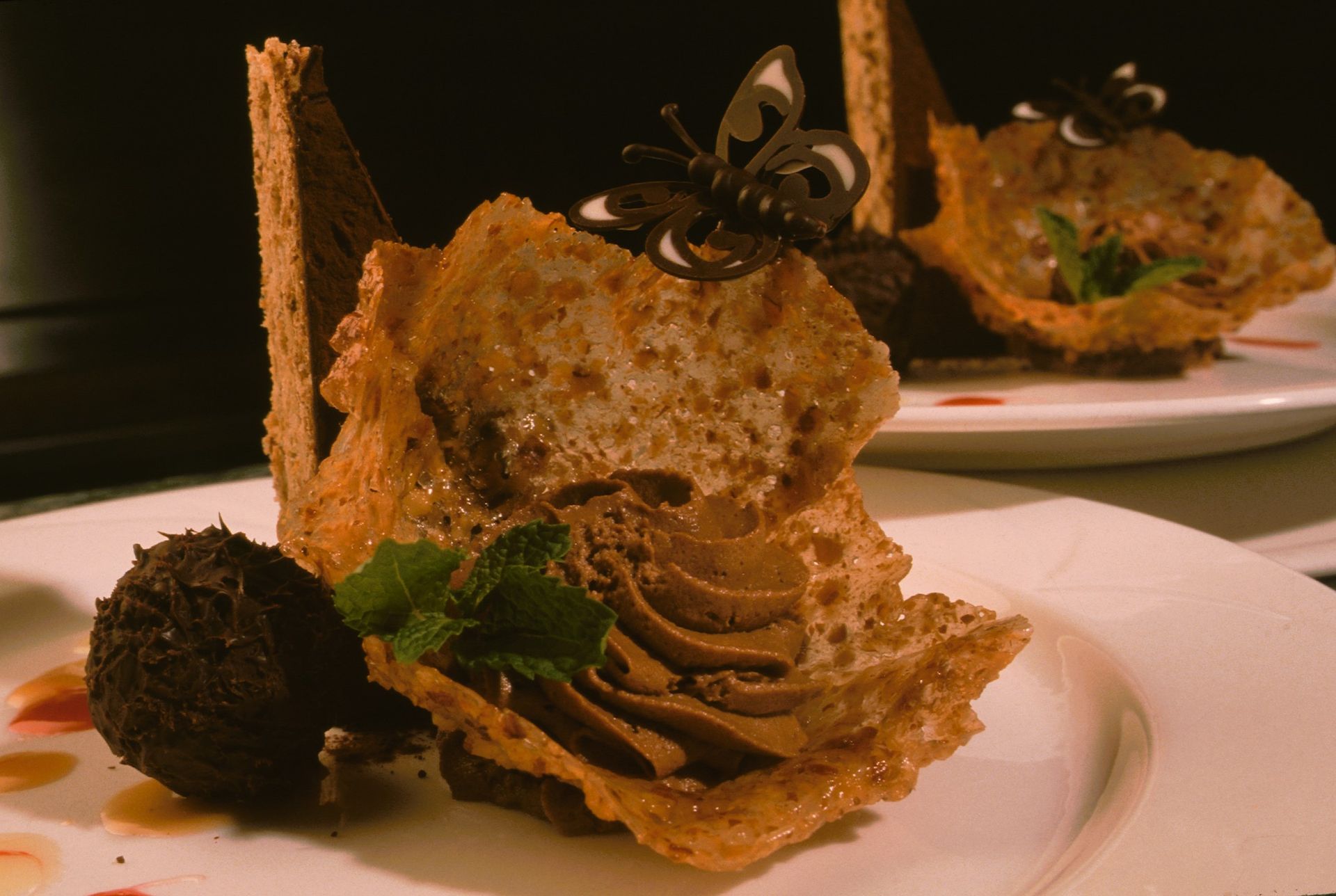
Trio of chocolate desserts
This is one of my favorite plated desserts featuring a hazelnut crisp filled with a simple chocolate mousse, plated with a triangle slice of the classic Opera cake and garnished with a dark chocolate truffle and a piped chocolate butterfly. I learned how to make the Opera cake in different way when I worked at Le Caprice in Georgetown when I was a young. The restaurant was a very small remodeled house and the chef was from Alsace. The way he taught me was to use hazelnut flour versus the traditional almond flour and also finishing the torte with a dustiing of coco powder which gives the torte a suprizingly bitter taste which offsets the rich sweetness of the torte layred with coffee flavored butter cream.
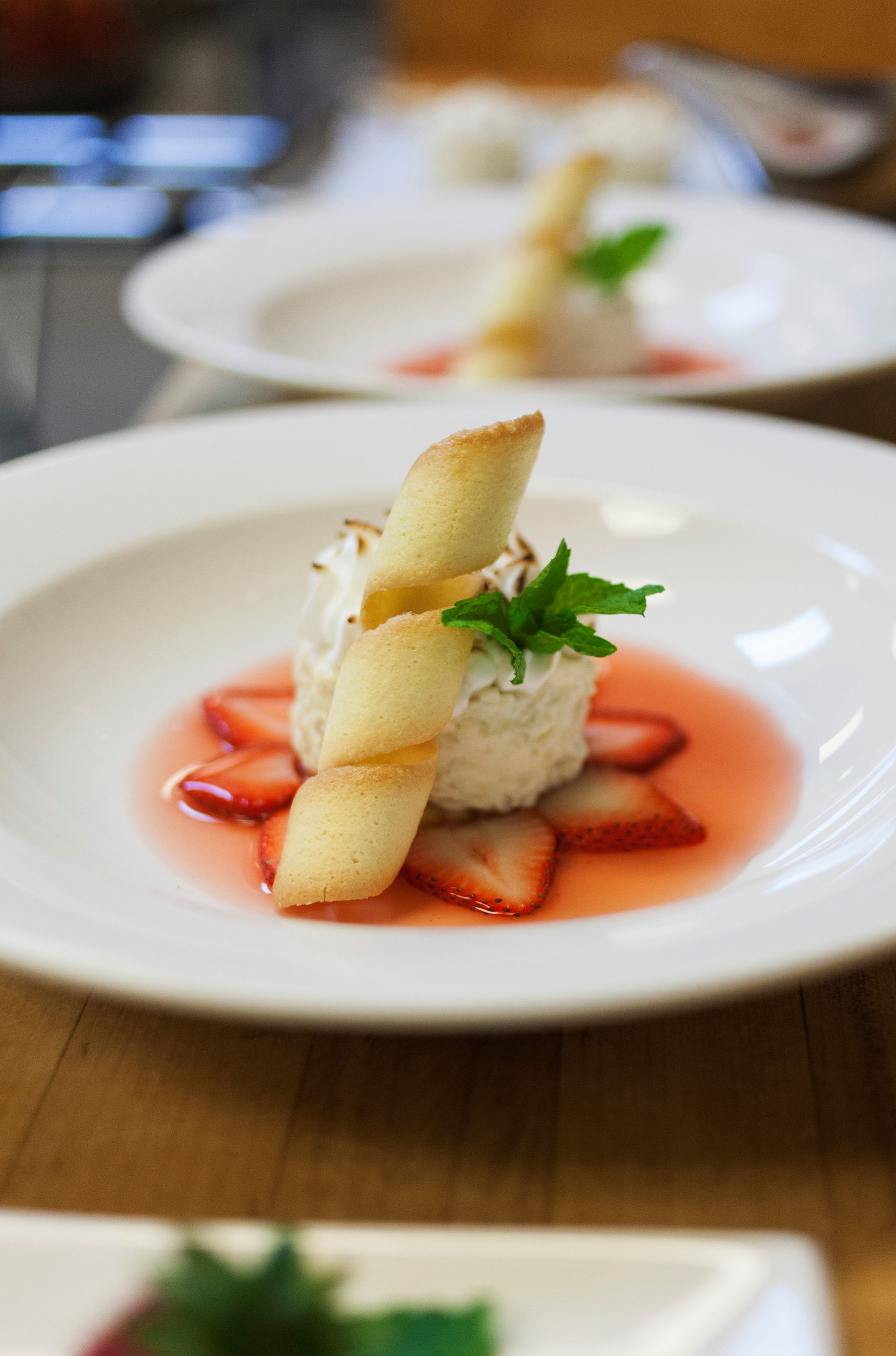
Basmati rice pudding with strawberry lavender sauce
This dessert is an upscale rice pudding made with Basmati rice and golden raisins lightened by folding in whipped cream. The sauce is made by infusing strawberries with simple syrup and candied lavender, which can be purchased. Lavender is often used in cream brulee. The molded rice pudding is served on simple pate sucree sugar cookie and topped with Swiss merengue browned with blow torch. The cookie garnish is a type of almond tuile made with almond paste and then wrapped around a dowl rod while still hot immediately after baking. This paste is known as Hippenmasse and was a popular decoration used in Germany for many elaborate desserts and competion dessert plates.